
SGG Guide
Cuban Link Bracelets: Styles, Prices and Sizing
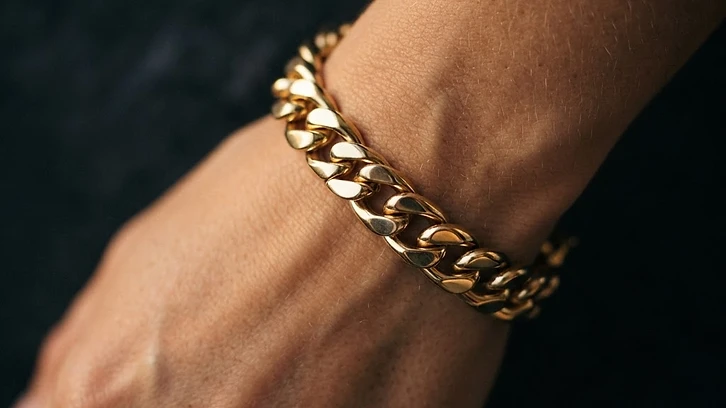
A Cuban bracelet is a Cuban chain's sibling: the same round, tight links — handmade or machine-built — sized for the wrist. It's the most-worn piece of gold many people own, because a bracelet works with everything and never comes off. Here's how to choose one: sizing, karat, weight math, and clasps.
What Makes a Bracelet a Cuban
The links are what define it: rounded on top, flat on the bottom, laid tight with little daylight between them. A Cuban chain guide covers the full anatomy; the bracelet version uses identical links at wrist length, usually 7 to 9 inches, with a clasp built to take daily flexing.
Sizing: Wrist Plus One
Measure your wrist with a soft tape where the bone is, then add about one inch. That's your bracelet length:
- 6.5" wrist → 7.5" bracelet
- 7" wrist → 8" bracelet (most common men's size)
- 7.5" wrist → 8.5" bracelet
The bracelet should rotate freely but not slide over the wrist bone. For wide bracelets (16mm and up), add a little more room — the links themselves take up space inside the circle. Like our chains, Cuban bracelets are made to order, so exact wrist sizes aren't a problem — call (206) 250-0833 with your measurement.
The Gram Math: Bracelet vs Chain
A bracelet is a fraction of a chain's weight because the wrist is a fraction of the neck. Using the same solid handmade link weights per inch as our 14K Miami Cubans — and pricing at the same $160 per gram for 14K:
- 14K 15mm at 8 inches: ~149 grams — about $23,840
- 14K 16mm at 8 inches: ~184 grams — about $29,440
- 14K 20mm at 8 inches: ~221 grams — about $35,360
Compare that to a 20-inch 20mm chain at $88,320 and you can see why bracelet-plus-chain is the classic two-piece build: together they read as a matched set, and the bracelet is often the first big solid gold purchase. Every made-to-order piece from us ships with its exact gram weight, karat documentation, and appraisal on request — the policy we explain in buying gold by the gram.
Karat Choices
10K is the hardest-wearing and most affordable; 14K is the standard for solid gold and the sweet spot of color, weight, and durability; 18K is the richest color and carries the highest metal content at $170 per gram. The trade-offs are the same as for chains — details in 10K vs 14K gold.
Clasps: Where Bracelets Live or Die
A bracelet flexes against a desk, a barbell, a steering wheel, all day. The clasp matters more here than on any chain:
- Box clasp — the standard on quality Cubans; a box that snaps shut with a click
- Hidden clasp — the clasp is built into a link and disappears into the line
- Safety catch — a secondary figure-8 or latch that keeps the bracelet on even if the main clasp fails
We recommend a hidden or box clasp with a safety on any solid gold bracelet. It's the difference between a piece you never think about and one you're checking all day.
Solid vs Iced Out
The same decision as chains: solid gold carries its weight in metal and reads as a clean, heavy line; iced out carries the budget in stones and reads as sparkle. Both are legitimate — they're just priced by different logic, which we break down honestly in iced out vs solid gold. For a first bracelet that will be worn every day for years, most of our buyers go solid.
Match It or Start With It
A Cuban bracelet is the single most versatile piece of solid gold you can own — and at bracelet weights, it's the most affordable entry into handmade solid links. Renton showroom, (206) 250-0833, or browse bracelets. Related reading: our gold bracelets style guide and the tennis bracelet guide.
Frequently Asked Questions
Ask us about this article
Send a question and our team replies to the email or phone you leave.